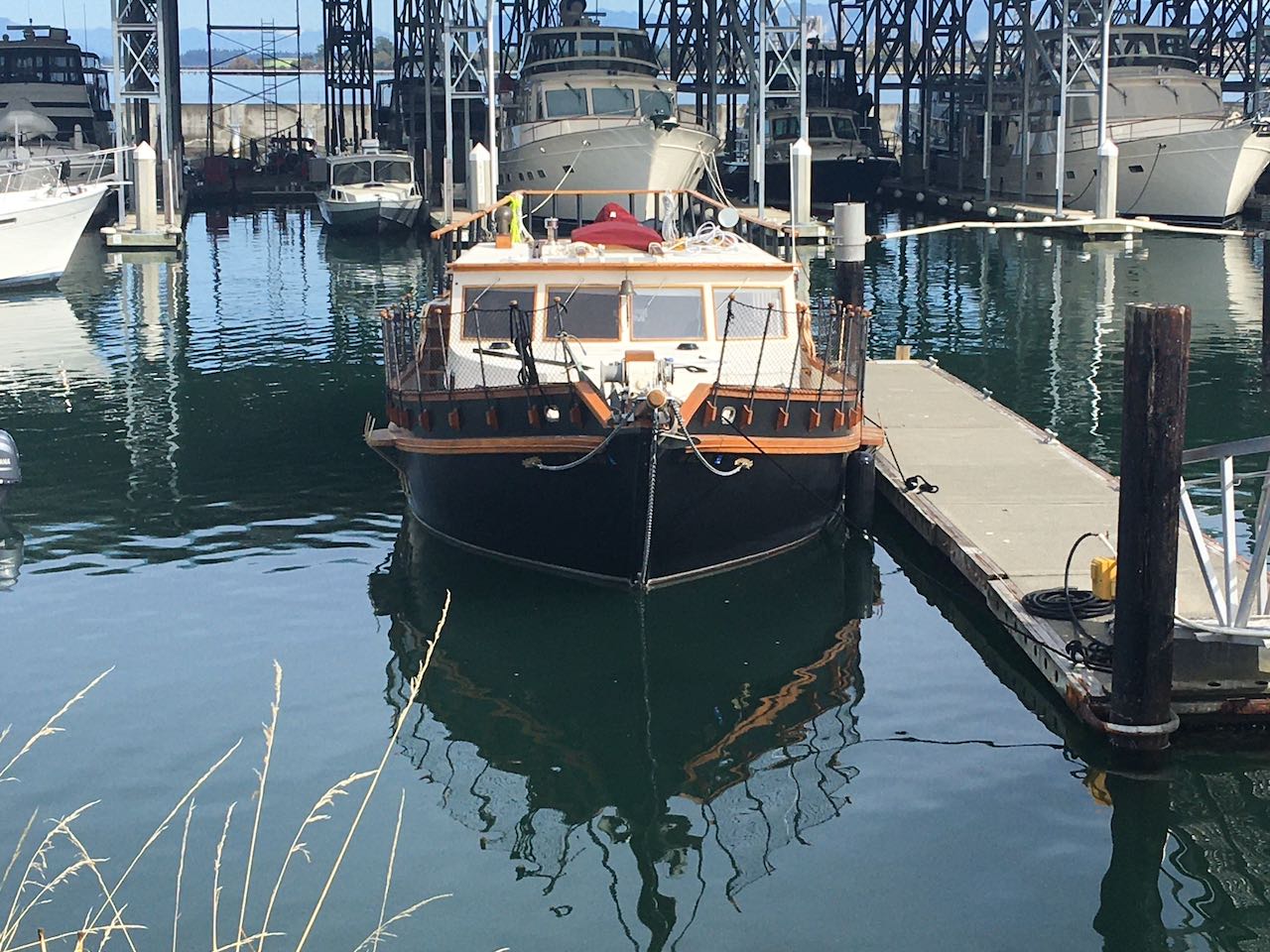
What Makes This Boat Exceptional

A One-of-a-Kind Custom Built Offshore Cruiser

The Sharon Rose is officially for sale, we are pricing her to sell quickly for

$395,000.00

Equipment List

602-935-5534

Sharon Rose web site

Click on the Sharon Rose Web Site above to check out the complete construction details since 1981, our maiden voyages and the sea trial adventures.
When on the construction page scroll down and start viewing construction details by years starting in 1981. There is also a Ship's Tour showing the completed ship interior.

I am open to reasonable offers. While she is fully capable of cruising under power, my hope is to find a buyer who will complete the rigging and let her sail as she was designed—powered by the wind.

At first glance, you may think my asking price is higher than similar boats on the market. However, this is not a typical production boat or even a standard Bruce Roberts Spray. It is a one-of-a-kind vessel that was engineered and built with strength, longevity, and offshore safety as the primary goals.

Many boats advertised as Bruce Roberts Spray yachts are simply built to the original plans. While I began with the Bruce Roberts 42-foot Spray plans, they were used primarily to create the full-size templates needed to build the male mold. From that point forward, the plans served only as a general reference while I incorporated numerous structural improvements throughout the vessel.

Built From the Ground Up

This boat was built entirely from scratch. Construction began with a heavy-duty strongback, followed by the male mold, and then the hand-laid fiberglass hull. Every stage of construction was completed with the philosophy that strength and durability were more important than saving time, weight, or cost.

Strongback Construction
Beginning construction on the strongback and male mold.
Mold Construction
Male Mold complete, showing the first test fiberglass layup.

A Stronger Hull Than the Original Design

One of the most significant improvements is in the keel area.

The original plans called for each fiberglass layer to terminate at the keel. Instead, I overlapped every layer of fiberglass an additional 3 to 5 feet across the keel. This effectively creates a double-thickness hull in the area most likely to encounter grounding, submerged debris, or impact.

To provide even greater protection, the external keel is fitted with a heavy steel shoe running from the rudder forward to approximately amidships. This sacrificial wear surface protects the hull if the boat encounters rocks, deadheads, or other underwater hazards.

Keel Construction
Galvanized steel shoe onto which is mounted a beaver tail to avoid prop and fishing net entanglements, and the rudder. The stainless steel rudder skeleton is shown.

Engineered for Offshore Strength

This vessel was never intended to be built to the minimum standard. My goal was to build a boat capable of handling the harshest conditions with a substantial margin of safety.

Rather than relying solely on the fiberglass hull for strength, I laminated heavy 3" × 3" structural formers directly into the hull, creating exceptionally rigid internal ribs. These are installed at every bulkhead location specified in the plans, with additional ribs spaced approximately every two feet between bulkheads.

The result is a remarkably stiff hull with excellent resistance to flexing and twisting under heavy sea loads.

Heavy laminated hull ribs at each bulkhead position. Also shown 12" centers for floor supports.
Hull Ribs
Roughed in ribs between bulkhead sections.

Superior Interior Construction

All interior ceilings and wall panels are both glued and mechanically fastened to these structural ribs, producing an exceptionally solid interior.

This construction method also provides up to three inches of space between the hull and the interior finish, allowing for thick foam insulation. The added insulation helps reduce condensation, minimizes temperature changes inside the boat, and provides a quieter, more comfortable living environment.

Heavy-Duty Deck Construction

The deck structure was built far heavier than is typical for boats of this size. The deck beams are constructed from laminated 3" × 3½" members (formed by gluing two 2×4s together) spaced on 24-inch centers. Heavy gussets are bolted between the beams, creating an extremely rigid deck capable of supporting heavy loads with minimal flex.

Here is a view of the construction utilized throughout the ship. Gussets bolted through ever cross member.
Here is a view of the ceiling in the pilot house. Gussets bolted through ever cross member.

Every major structural decision during construction favored strength, durability, and safety over cost or ease of construction. This is not simply another Bruce Roberts Spray—it is a custom-built vessel with numerous engineering improvements designed to provide decades of dependable service and the confidence to venture offshore in demanding conditions.

When comparing prices, don't compare this boat to an average home-built Bruce Roberts. Compare it to the quality of construction, the engineering improvements, and the decades of work invested in creating a vessel built to last a lifetime.